
A repainted wall, a relocated light fixture, a changed textile: these micro-interventions alter the perception of a room much more than a new piece of furniture would. The challenge is twofold when renting your home, as each modification must remain reversible. The most useful interior decoration tips are those that take this constraint into account from the outset.
Rental Property Decoration: Adapting Each Tip Without Risking the Security Deposit
You may have noticed that a landlord tolerates a framed picture hung on the wall but refuses a wall painted in navy blue? The line between personalization and degradation is not always clearly defined in the lease. In practice, French case law distinguishes between “minor repairs” and regular maintenance, which is the tenant’s responsibility, and transformations that alter the structure or permanent appearance of the property.
The safest rule: any modification must be able to be undone before the exit inspection. This automatically excludes permanent adhesive tiles, multiple drill holes in non-repairable drywall, or dark paints on large surfaces without written agreement.
To explore decoration tips on Vivez Décorez, you will find approaches designed for all types of interiors, including those where the margin for maneuver is limited.
Three categories of interventions are almost always risk-free in rentals:
- Removable textiles (curtains, cushions, rugs, throws) that transform the ambiance of a living room or bedroom without touching the walls or floor.
- Accent lighting (table lamps, string lights, repositionable LED strips) that replaces the white light of the ceiling fixture with a chosen atmosphere.
- Light furniture and wall accessories without drilling (adhesive hooks, tension rods, freestanding shelves) that add storage or decoration without leaving a trace.

Colors and Paint: Transforming a Room with Just One Wall
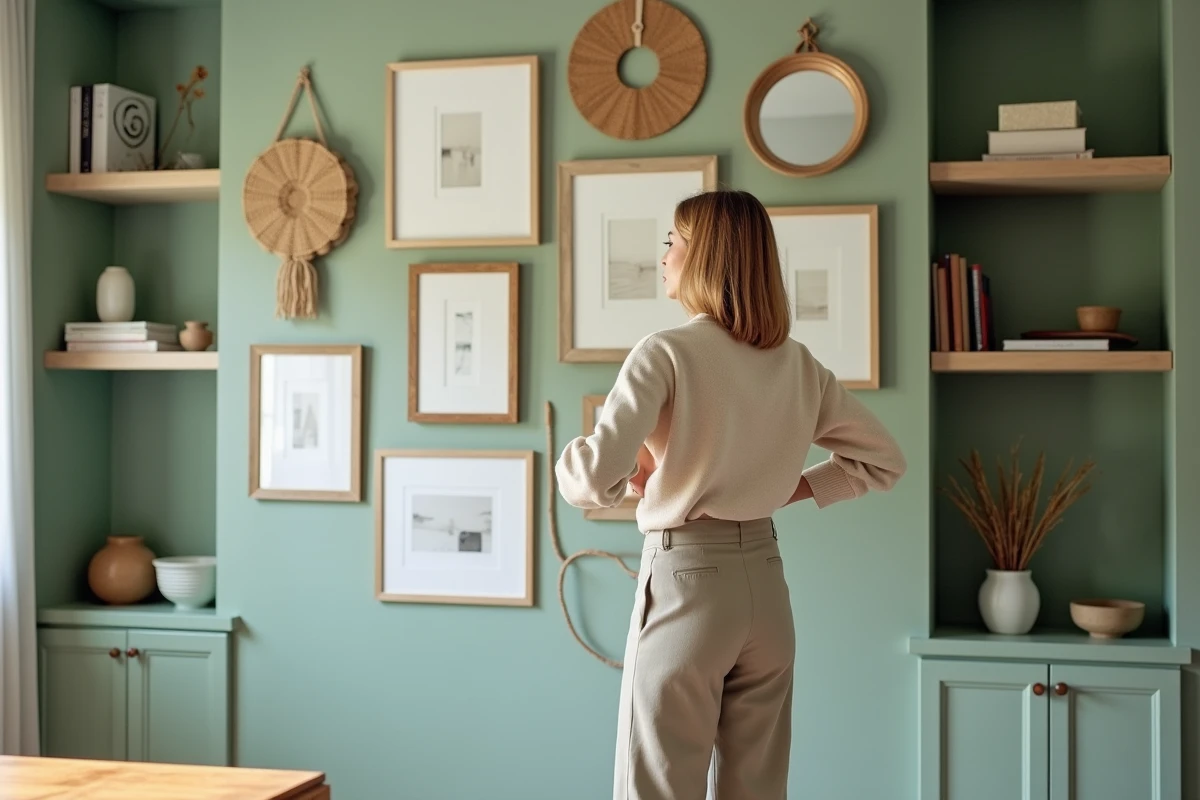
Covering all four walls in a strong color is rarely the best idea. A single, well-chosen accent wall is enough to refocus the gaze and give character to an entire space. This accent wall acts as a frame: it highlights what is in front of it, whether it’s a sofa, a shelf, or a desk.
Which Surface to Choose for the Accent Wall
Favor the wall you see when entering the room. In a living room, it is often the one behind the sofa. In a bedroom, it is the one behind the headboard. This positioning creates visual depth without weighing down the space.
A dark accent wall visually recedes and enlarges the room, provided the other three remain light. The opposite, a light wall surrounded by dark walls, creates an unpleasant tunnel effect.
Reversible Alternatives to Traditional Paint
For renters, peel-and-stick non-woven wallpaper offers a finish comparable to paint. It can be removed cleanly if the surface was smooth and healthy at the time of installation. Solid color washi tape, more discreet, is suitable for small areas like a niche or the outline of a door.
Since January 2026, the European regulation 2025/2994 mandates mandatory labeling of VOC emissions for paints and interior textiles sold in the EU. Checking the VOC label before buying paint is no longer a precaution; it is a reflex to adopt for indoor air quality.
Indoor Lighting: Three Levels of Light for a Successful Living Room
A ceiling light alone flattens the volumes and eliminates shadows. A well-lit interior layers three types of light, each with a specific role.
The first level is general lighting (ceiling light or pendant) that ensures overall visibility. The second is task lighting (desk lamp, reading light) that targets a specific activity. The third is ambient lighting, which truly changes the atmosphere: a table lamp with a shade, a candle, an LED strip behind a piece of furniture.
Why does this third level make such a difference? Because it creates intentional shadow areas. The eye moves between the light points and the darker areas, giving depth to even a small room.
Placing Light Sources at Varied Heights
A pendant light from the ceiling, a table lamp at table height, a lantern on the floor: this vertical variation replicates natural light, which never comes from a single angle. In a modestly sized living room, two well-placed accent lamps are better than a central chandelier.
Adjustable temperature bulbs allow you to switch from cool light (work, kitchen) to warm light (relaxation, evening) without changing fixtures. This adjustment is made from a wall dimmer or, on some models, directly from a switch.
Layout and Furniture: Rethinking Circulation Before Decorating
Before choosing a rug or cushion, observe how you move around the room. The most polished decoration cannot compensate for a layout that forces you to navigate around a table or squeeze between two pieces of furniture.
A minimum circulation space of 60 centimeters between each piece of furniture is essential. Below that, the passage feels constrained, and the room appears smaller than it is.
The Daily Route Test
Mentally trace your morning route: from the bedroom to the bathroom, from the kitchen to the table. Each obstacle (a protruding furniture corner, a door that hits) indicates a layout problem. Moving a piece of furniture by twenty centimeters costs zero euros and can sometimes free up the flow of a hallway or living room.
The style of an interior does not depend on the number of accumulated furniture or decorative elements. It relies on the coherence between light, chosen colors, and the space left free.
A room where one can move freely, where the gaze finds a focal point, and where light varies according to the time of day gives an impression of well-thought-out design, even on a limited budget. It is this combination that transforms a rental into a place where one wants to stay.