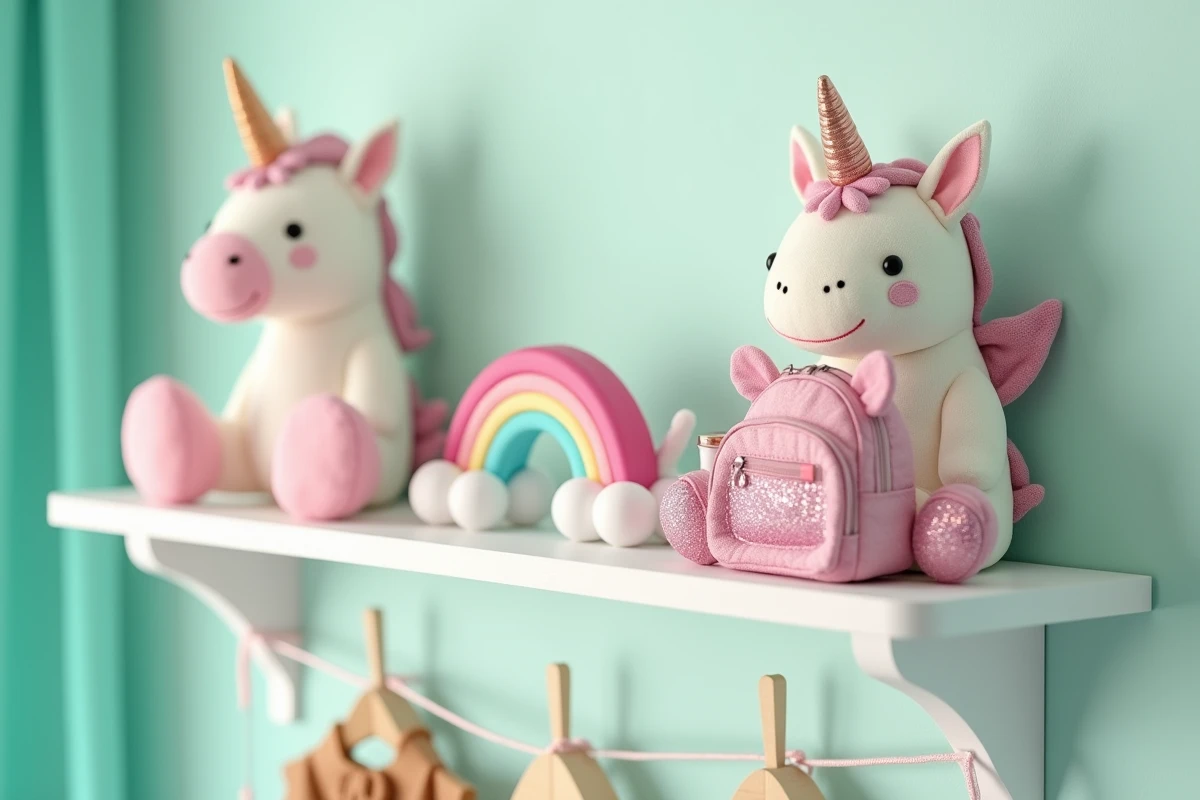
The children’s unicorn section no longer resembles what it was a few years ago. The products no longer simply feature a rainbow pattern on any surface: they are now associated with identified licenses, follow collection logic, and target specific age groups. For parents, the choice has become more complex at the same pace as the offering has expanded.
Unicorn Academy License: What Changes in Unicorn Buying Logic
The animated series “Unicorn Academy” (or “L’École des Licornes” in French) has restructured part of the market for unicorn-themed children’s items. The merchandise is no longer just generic figurines: they are linked to named characters, narrative scenarios, and coherent visual universes.
This rise of an identified intellectual property changes the way a child asks for a gift. They no longer request “a unicorn,” but a specific character, an accessory seen in an episode, a playset that recreates a scene. For parents, this means that compatibility between products of the same license becomes a purchasing criterion.
The license is now distributed simultaneously at several major retail chains, making access easier but multiplying references. While browsing the children’s universe of Licorne Cosmique, you can find this structured range that allows for easier navigation through an increasingly dense offering.
Unicorn Items for Children: Beyond Classic Toys
Current search results show a clear expansion of product categories. The unicorn market for children is no longer limited to plush toys and dolls. Stationery, fashion accessories, room decor, and collectible items are taking up an increasing space.
Impulse Products and Low Prices
Several retailers position unicorn items at very low entry prices, sometimes accompanied by promotions on the second product purchased. This “easy gift” strategy targets both birthday parties among friends and small everyday rewards.
The most represented categories in this low-price logic include:
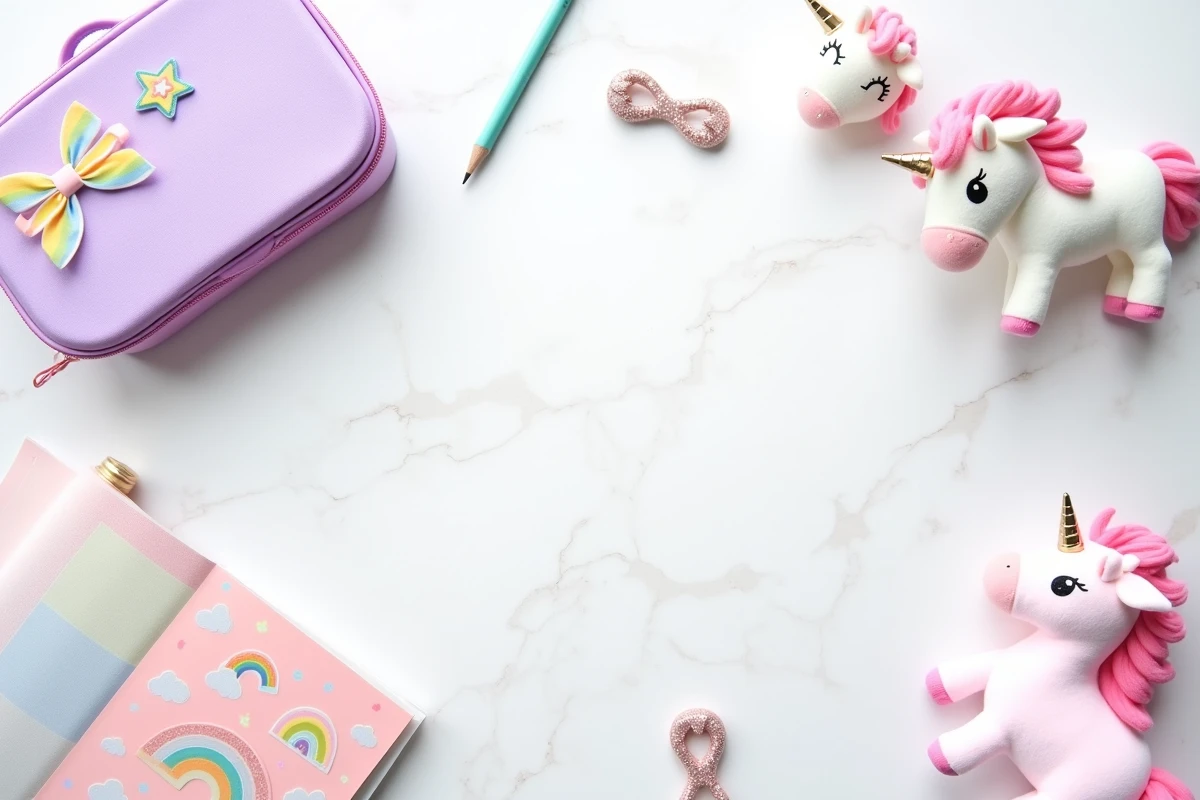
- Thematic stationery (notebooks, pens, stickers) that integrates into school supplies without major additional costs
- Fashion accessories (hair clips, backpacks, bracelets) worn daily and frequently renewed
- Collectible figurines sold individually, which feed a loyalty mechanism in children
The unicorn gift today operates on a model of repeated purchases rather than a single high-value purchase. Parents buy several small items throughout the year, where previously one large toy sufficed.
Decoration and Textiles
Bedding sets, cushions, night lights, curtains: the unicorn theme is more structurally investing children’s rooms. The ranges offer coordinated sets rather than isolated pieces. For both girls and boys (even if marketing predominantly targets the former), the unicorn universe becomes a true decorative choice and not just a one-off pattern.
Safety and Choice of Unicorn Products: What Parents Rarely Check
The enthusiasm for unicorn items generates an abundant offering, including on online marketplaces where many third-party sellers are present. The question of children’s product safety deserves to be raised, especially for low-cost imported items.
The often overlooked points of vigilance include:
- CE marking, mandatory for toys sold in Europe, which certifies compliance with safety standards
- The age range indicated on the packaging, often ignored during a quick online purchase
- The composition of textiles and paints, especially for accessories worn directly on the skin or put in the mouth by the youngest
- Small detachable parts on collectible figurines, a source of ingestion risk for children under three years old
A low-priced unicorn product is not necessarily a low-quality product, but the lack of filtering on certain platforms requires parents to conduct minimal checks before purchase. Specialized physical stores generally apply prior controls, which is an advantage over third-party sellers on marketplaces.
Online Unicorn Store or Physical Store: Two Distinct Shopping Experiences
Data from search results reveal an interesting phenomenon: physical stores emphasize immediate availability and short supply chains, while online shops capitalize on catalog depth and customer reviews.
For gift purchases, the physical store is often preferred. The child can see and touch the product, which reduces disappointment rates. In contrast, for collectible products or specific references related to a license, online research offers broader access.
Field returns diverge on this point: some parents prefer the curation of a specialized store that selects its references, while others want to compare as many options as possible. Both approaches coexist, and the choice depends as much on the type of product sought as on the available budget.
The market for unicorn items for children has matured. The offering has been structured around strong licenses, segmented price ranges, and complementary distribution channels. For parents, the most useful reflex remains to check product compliance and distinguish between an impulse purchase and an investment in a universe that the child will follow over time.