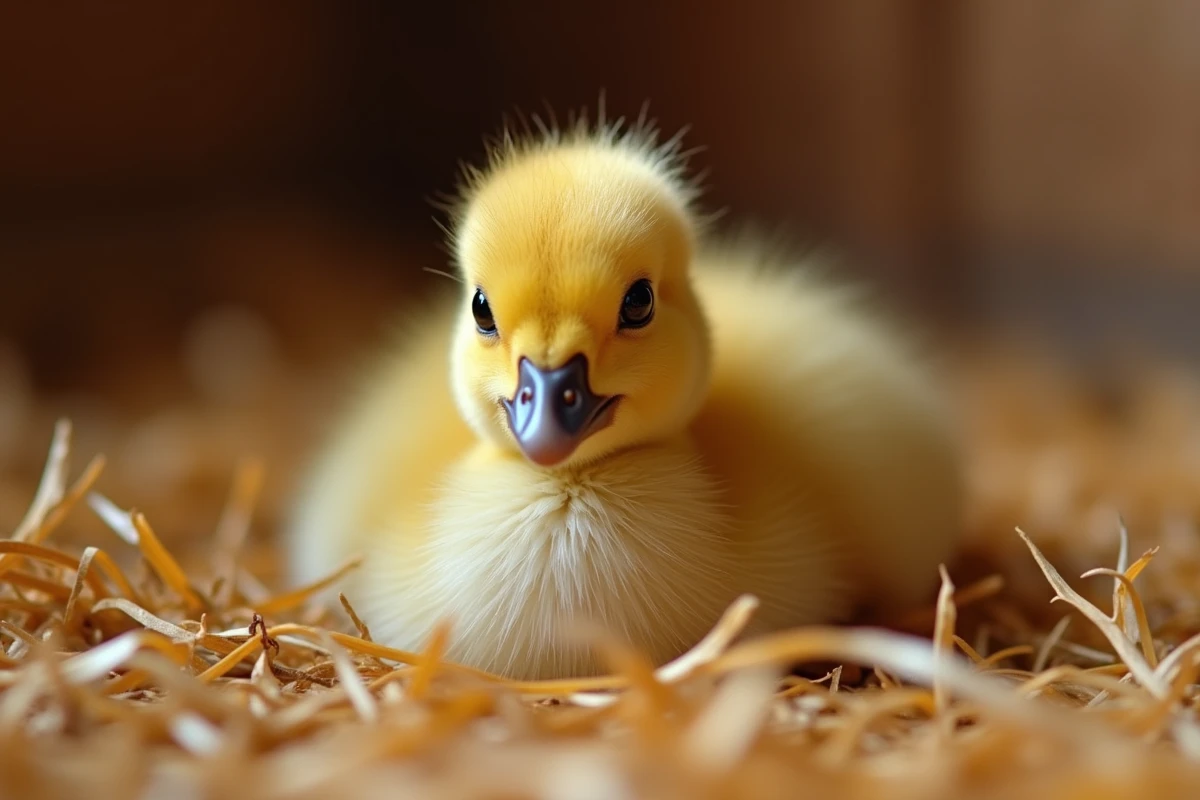
A gosling hatches from its shell covered in yellow down, with its eyes open, already capable of walking. A few hours later, it follows its mother step by step. This rapid start distinguishes goslings from many other birds: the chick is not naked and blind in the nest; it is ready to explore.
Understanding the stages that lead this fluffy little one to become an adult weighing several kilograms helps better support its growth, whether one is an amateur breeder or simply a nature enthusiast.
Intestinal microbiota of the gosling: an underestimated growth engine
Even before discussing feathers or food, an invisible factor conditions the health of the gosling: its intestinal flora. A study published in Poultry Science (Zhou et al., 2023) shows that the diversity of the intestinal microbiota increases significantly between the first and fourth week of life in domestic geese.
Goslings that have early access to a grassy outdoor environment experience fewer episodes of diarrhea and better weight gain. Early contact with the ground, blades of grass, and the microorganisms present acts as a natural seeding of the digestive tract.
For a breeder, this means that keeping goslings confined in a heated space for too long can hinder the establishment of this protective flora. As soon as the weather permits and the down provides sufficient insulation, short outings on clean grass promote solid digestive development. The growth and evolution of the baby goose partly depend on this early microbial balance, long before the first feathers appear.

From down to adult plumage: the growth phases of the gosling
The yellow down that covers the gosling at hatching is not true plumage. It serves as thermal insulation during the first days but is quickly replaced.
First weeks: the thermal covering changes
During the first two weeks, the gosling still depends on its mother’s warmth (or a heat lamp in breeding). Its down, although dense, is not sufficient against cold or prolonged humidity. Contour feathers begin to break through the down after a few weeks.
The transition from down to plumage generally lasts several weeks, with phases where the gosling appears ruffled, almost unwell. This is normal: the old down fibers fall out while new feathers grow.
Rapid growth and muscle development
Weight gain is remarkable in geese. In just a few months, a gosling weighing a few dozen grams can reach several kilograms. This growth rate varies by strain. In recent years, some European hatcheries (notably in Germany and the Netherlands) have offered so-called “slow growing” lines, selected for slower growth but favorable to the well-being and longevity of the animal.
For a companion or guard goose, these moderate growth strains present a concrete advantage: fewer joint problems, better resilience, and a longer lifespan.
Feeding the gosling according to its age
The goose is a more assertive herbivore than the chicken or duck. However, the gosling starts with a mixed diet before transitioning to grass.
- During the first two weeks, a high-protein starter feed (like crumbs for waterfowl) forms the base, supplemented with finely chopped grass and clean water available at all times
- Between the third and sixth weeks, the proportion of fresh grass gradually increases while the complete feed decreases, as the gosling’s digestive system adapts to cellulose
- Beyond two months, grass constitutes the majority of the diet, supplemented by grain (wheat, oats) in moderate amounts, especially in winter when grazing is limited
Permanent access to water is a non-negotiable point. The gosling must be able to immerse its head to clean its nostrils and eyes. A water trough that is too shallow causes frequent eye irritations.

Social behavior and learning in young geese
The goose is a social animal from birth. Imprinting occurs in the first hours: the gosling follows the first moving being it identifies, usually its mother. A group of goslings always stays close together, either in a line or a cluster.
Raising a gosling alone is not recommended. Without a companion, it develops stress, cries more, and may become aggressive in adulthood. A group of at least two to three goslings allows for normal social learning: hierarchy, alert signals, sharing grazing.
Learning to swim and fly
The gosling swims naturally, but it does not float indefinitely without the sebum produced by the uropygial gland, which is not fully functional until after several weeks. The first swims should remain short and supervised, in shallow water.
Flight, on the other hand, only occurs once the complete plumage is established. In most domestic breeds, the ability to fly is greatly reduced compared to wild geese. Heavy breeds (Toulouse goose, Embden goose) hardly take off at all. Lighter breeds can clear a low fence, which should be anticipated.
Density and space: what guides often overlook
Most content on goslings details feeding or temperature but quickly glosses over breeding density. Experimental data, however, shows that available space directly influences plumage, stress, and growth.
- Indoors (brooder), goslings need a floor area that increases each week to prevent pecking and lameness
- Outdoors, access to a sufficiently large grassy area prevents overgrazing and nutritional deficiencies
- Environmental enrichment (small floating objects in the water, areas of loose soil) reduces stereotypical behaviors such as excessive feather preening
These density and enrichment parameters, derived from experimental data, make a real difference in the final outcome: a balanced, healthy adult goose with proper plumage.
Between hatching and maturity, the gosling undergoes transformations in just a few months that other species spread over years. Each phase (down, intermediate plumage, adult plumage) comes with rapidly evolving dietary, social, and spatial needs. The chosen strain, early access to the outdoors, and group living remain the three most concrete levers to achieve a robust and well-socialized adult goose.