Which pieces are really worth the detour this season, and which are just marketing noise? Between the spring-summer 2026 fashion shows and the new regulations reshaping the textile offer in France, this season’s fashion trends are no longer just a list of colors or cuts. They also reflect a changing legal framework that pushes brands to rethink what they offer and how they promote it.
Textile Regulation 2026: What Changes for Fashion Trends
Before discussing cuts or palettes, a look at the regulatory framework is necessary. Two recent texts directly modify what brands can sell and communicate in France.
| Measure | Effective Date | Impact on Fashion Offer |
|---|---|---|
| Ban on destruction of unsold goods (EU) | July 19, 2026 (large companies) | Mandatory resale, donation, or refurbishment: collections are tightening |
| Anti-ultra-fast fashion law (France, law n° 2026-602) | July 8, 2026 (modulated eco-contribution) | Additional costs for brands with ultra-fast renewal |
| Ban on ultra-fast fashion advertising | January 1, 2027 | Influencers will no longer be able to promote these products |
| Display of environmental cost | October 1, 2026 | Price alone is no longer enough: consumers see the ecological impact |
The concrete result: brands that relied on disposable micro-trends (a viral cut each week) are losing their main promotional lever. Mid-range brands have a reprieve until 2030 for the destruction ban, but the modulated eco-contribution affects them right now.
For consumers, this means that the pieces offered this season are, on average, designed to last longer in a wardrobe. The trends emerging from the spring-summer 2026 shows confirm this shift towards less ephemeral clothing. Resources like fashionclick.fr allow tracking these developments by intersecting style and sustainability.

Key Colors and Materials for Spring-Summer 2026: Leather, Red, and Neutral Tones
The fashion shows highlighted palettes and textures that share a common point: they transcend seasons without becoming dated in a few weeks.
Red, the Dominant Color on the Runways
Identified by Vogue as one of the major trends for spring-summer 2026, red has established itself from total looks to accessories. This is not a single red: the shades range from bright vermilion to dark red, making it adaptable to different styles and skin tones.
In contrast, burgundy, spotted in the fall 2026 collections, fits into a more autumnal continuity. Bright red marks spring-summer, while burgundy takes over in the fall.
Leather and Structured Materials
Leather (or its plant-based alternatives) is making a strong comeback, identified as a major trend under the label “Hell for leather” in runway analyses. Structured leather pieces (short jackets, midi skirts, straight trousers) are gradually replacing the ultra-light materials of previous seasons.
Reimagined Neutral Tones: Chocolate, Ecru, Khaki
Chocolate, ecru, and khaki serve as durable wardrobe staples, not as disposable seasonal trends. Their simultaneous presence on the runways and in fall commercial collections indicates that they will remain wearable well beyond a single season.
Key Pieces to Adopt This Season: Blazer, Straight Jean, and Day Dress
Rather than listing ten garments, three categories of pieces concentrate the essence of what is changing this season.
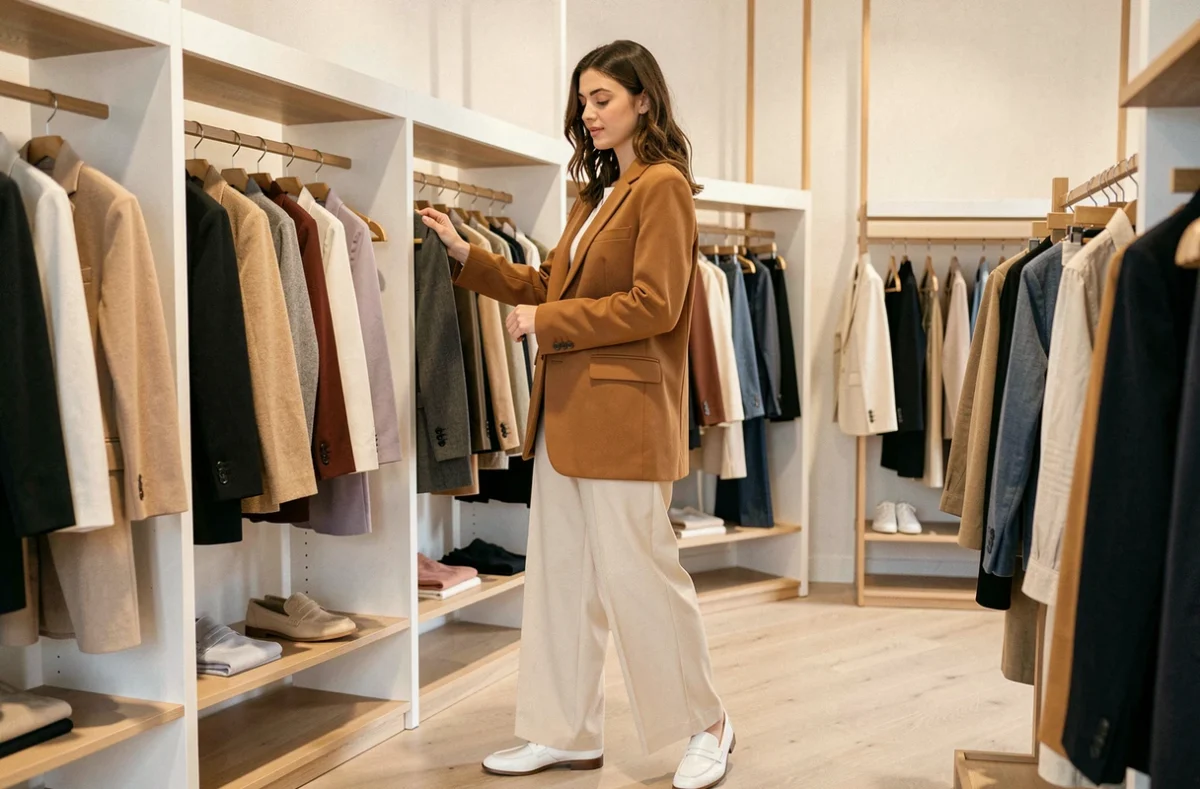
- The structured blazer remains the most versatile piece in the fall 2026 collections, worn both with straight jeans and a midi skirt. Its cut is evolving towards more pronounced shoulders and a slightly fitted waist.
- The straight or barrel jean is gradually replacing slim and flare styles in brand offerings. The barrel cut (slightly rounded at the thighs, tapered at the ankle) has been identified as a key silhouette for spring-summer 2026.
- The day dress, categorized as “day beauties” in the shows, favors midi lengths and materials that hold up for daily wear, far from ultra-thin one-use dresses.
These three pieces share a characteristic: they do not depend on a viral print or a trendy color to work. They integrate into an existing wardrobe, which aligns with the regulatory pressure towards less frequent and more thoughtful purchases.
Prints and Micro-Trends: Sorting the Durable from the Disposable
Each season generates its share of patterns presented as inevitable. This season, two categories stand out.
Prints with strong longevity potential include wide stripes and graphic leopard, both present in fall commercial collections. Their recurrence over several consecutive seasons indicates that they will not disappear by December.
In contrast, some very specific patterns seen on only one or two runways (pixelated micro-flowers, reimagined tie-dye) are more micro-trends. A print present in fewer than three mainstream brands is unlikely to last beyond a season.
The oversized sweater, identified as a trend for spring-summer 2026, illustrates the boundary between a durable piece and a fashion effect. Worn in quality material, it transcends seasons. In an ultra-thin and low-quality version, it loses its shape after a few washes, exactly the type of product that the new eco-contribution aims to discourage.
How to Build a Stylish Look That Withstands Seasonal Changes
Regulatory data and runway trends converge on the same conclusion: the profitability of a wardrobe is measured by the cost per wear, not the purchase price.
- Favor base colors (neutral chocolate, ecru, khaki) for the most worn pieces, and reserve bold colors (red, burgundy) for accessories or a single piece per outfit.
- Choose structured materials (leather, thick knit, rigid denim) that retain their shape rather than ultra-thin fabrics to be renewed each season.
- Check if the brand displays the environmental cost of its products, a transparency indicator that will become mandatory for the largest brands starting October 2026.
This season’s fashion is no longer defined solely by what appears on the runways. The French and European legal framework now filters what arrives in stores. The pieces that remain, the structured blazer, the barrel jean, the neutral tones enriched with red, are those that work in this new context: less volume, more longevity, and an environmental cost that is starting to weigh in the balance.