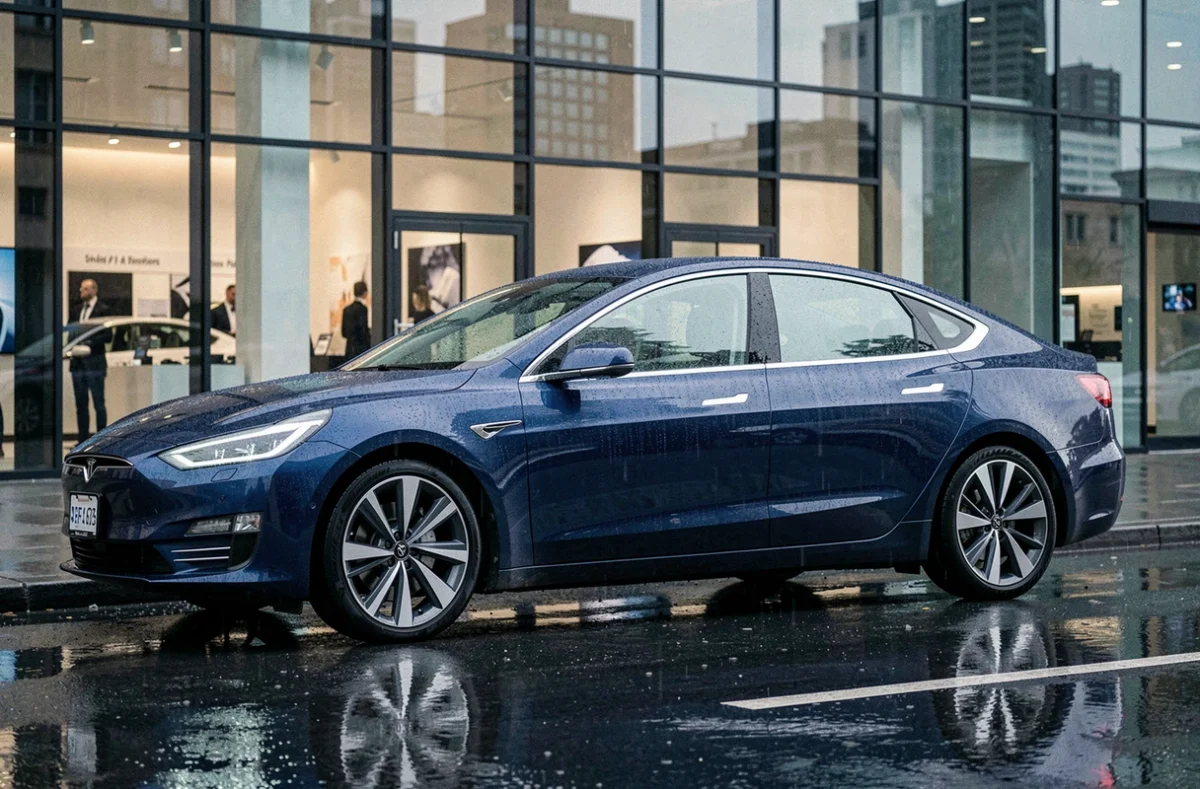
Malus tightened, bonus transformed, affordable electric city cars at the Paris Motor Show 2026: the automotive news at the end of this year reshuffles the cards for French buyers. Measuring the gap between the new fiscal constraints and the offers presented by manufacturers helps to understand where the real financial interest in changing vehicles lies.
CO2 malus and weight malus in 2026: compared thresholds
The tightening of the automotive malus on January 1, 2026, has modified two parameters simultaneously: the threshold for triggering CO2 emissions has been lowered compared to 2025, and the ceiling for the maximum malus has been raised. The threshold for the weight-related malus has also been lowered.
| Criterion | 2026 Evolution | Exempt Vehicles |
|---|---|---|
| CO2 Malus | Threshold lowered, ceiling raised | 100% electric and hydrogen vehicles |
| Weight Malus | Threshold lowered | Exclusively electric or hydrogen vehicles |
| Electric Purchase Aid | Old bonus replaced by a CEE premium | Not applicable (aid, not tax) |
This table highlights a growing gap: thermal and hybrid SUVs face a double penalty (CO2 and weight), while 100% electric vehicles are exempt from the weight malus. For a buyer hesitating between a gasoline SUV and its electric equivalent, the difference in fiscal cost at purchase has widened even further.
Buyers who follow auto news on Net Actu regularly find detailed updates on these scales, making comparisons easier before signing.

CEE premium for electric cars: what replaces the state bonus
The bonus paid directly by the state for passenger cars has disappeared in its classic form. It is replaced by a premium funded by energy savings certificates. The difference is structural: the amount is no longer set by a unique regulatory scale. It depends on the offer from the chosen energy supplier.
In practice, two buyers of the same model can receive different amounts depending on the selected CEE partner. This mechanism makes comparison more complex than with the old bonus, but it has not eliminated the aid. Some households can still receive significant financial support.
- The amount varies according to the partner energy supplier, not according to a fixed national scale
- The vehicle’s eligibility and resource conditions must be verified on a case-by-case basis
- The process involves a CEE file, different from the old bonus application form
This change in the nature of the aid explains why many motorists mistakenly believe that all subsidies have disappeared. Information circulates less effectively because the system is decentralized.
Electric city cars at the Paris Motor Show 2026: price and range at stake
The 2026 Motor Show focused announcements on a segment long neglected by electric vehicles: the affordable city car. Renault with the Twingo, Volkswagen with the ID. Polo, BYD with its entry-level models – the signal is clear. Manufacturers are targeting the segment where sales volume is highest in France.
The upcoming DS N°3, designed on the STLA One platform shared with the Peugeot e-208 and 2008, promises up to 500 km of range thanks to its cell-to-pack battery. This figure, if confirmed under real conditions, would place a premium city car at the range level of current compact sedans.
The stakes for buyers are not only the list price. It is the combination of three parameters: the price after the CEE premium, the real range, and the cost of the avoided malus compared to an equivalent thermal model. On a thermal SUV, the combined CO2 malus and weight malus can represent several thousand euros, an amount that mechanically reduces the price gap with an electric city car.
ZFE restrictions in France: no uniform national calendar
Low emission zones add a geographical variable to the calculation. ZFE restrictions do not form a uniform national calendar: they depend on local decrees, which define the vehicles concerned, the days and hours of application, and any exemptions.
Paris and Lyon apply stricter restrictions, while other metropolitan areas follow different schedules. A Crit’Air 3 vehicle may circulate freely in one area and be banned in another.
- Check the decree of the relevant metropolitan area before any purchase or movement
- Exemptions (professionals, disabilities, classic vehicles) vary from one ZFE to another
- The Crit’Air classification remains the basic criterion, but the prohibition thresholds differ locally
For a used vehicle buyer, this regulatory mosaic requires cross-referencing the Crit’Air sticker of the targeted vehicle with the rules of their place of residence and frequent travel. A Crit’Air 2 diesel bought in a rural area retains its utility value, whereas the same vehicle loses part of its usefulness in a large metropolitan area.
European CO2 standards: ongoing Franco-German negotiations
At the European level, France and Germany are negotiating a relaxation of CO2 emission rules for manufacturers, in a context where the regulatory trajectory is the subject of debates among European institutions.
This negotiation has direct consequences on the automotive offer in the medium term. If reduction targets are relaxed, manufacturers will face less pressure to quickly abandon hybrid engines. Plug-in hybrid models could remain in the catalog longer than expected, which would alter the cost/benefit calculation for buyers hesitating between hybrid and 100% electric.
The automotive news at the end of 2026 can be summarized as a double movement: French fiscal constraints pushing towards electric, and European negotiations that could slow down the transition on the manufacturers’ side. The choice of a vehicle now depends as much on local taxation as on the list price.