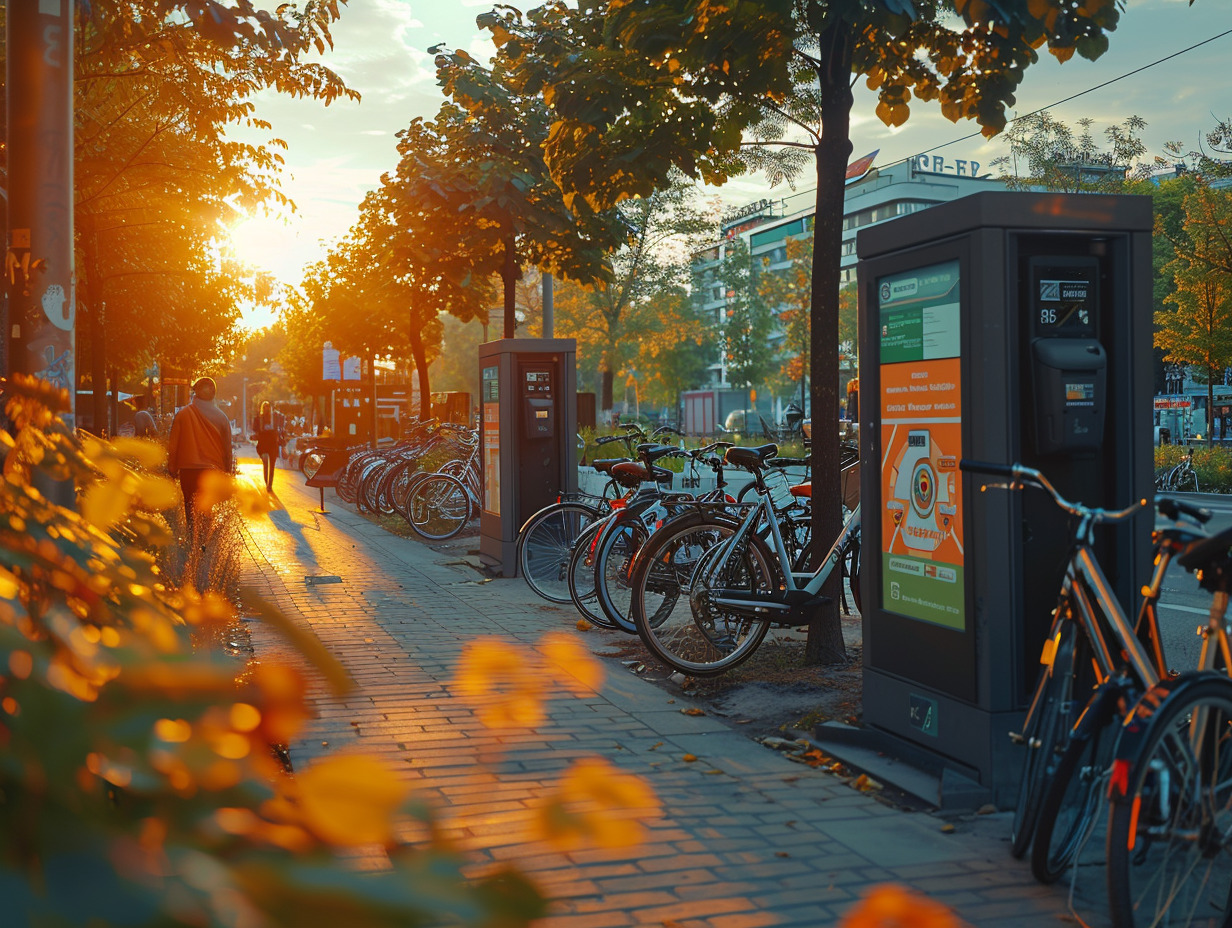
In the changing landscape of urban mobility, Keolis stands out as an innovator with its self-service offering, redefining the urban travel experience. This system allows users to access various modes of transport, such as bikes, electric scooters, and cars, with unmatched simplicity and flexibility. Keolis’ model encourages shared vehicle use, thereby helping to reduce congestion and pollution. This initiative is part of an eco-responsible approach and responds to the growing demand for more adaptive and sustainable transport solutions.
Keolis self-service: innovation at the service of urban mobility
The Keolis self-service is emerging as a benchmark model for urban transport. The company, recognized as a major player in public transport services, deploys a service that revolutionizes the daily management of urban travel. Accessibility through a dedicated mobile app offers users the ability to book their trips, check real-time schedules, and search for the most suitable routes for their needs.
The use of artificial intelligence by Keolis optimizes the user experience by predicting and adapting transport services to variations in demand. Close collaboration with entities such as SNCF Connect and Affluences enriches the Keolis service by providing accurate data on transport crowding, thus enabling better management of passenger flows. This strategic partnership embodies Keolis’ commitment to sustainability and smart urban mobility.
The Keolis self-service, by allowing secure online payments and simplifying booking and consultation processes, contributes to the improvement of public transport services and the reduction of operational costs. This innovative approach, centered on the user and their experience, reaffirms Keolis’ ambition: to be at the forefront of urban mobility, aligned with contemporary challenges of connectivity and efficiency.
The impacts of Keolis self-service: user experience and socio-economic benefits
The user experience, a central pivot of the Keolis Self-service strategy, is undergoing a radical transformation. Allowing the booking of trips, checking schedules, and searching for routes via a mobile app gives users unprecedented autonomy and flexibility. This ease of access, combined with secure online payments, results in a notable increase in customer satisfaction, thereby leading to greater use of public transport services.
Within urban mobility, the Keolis Self-service generates significant socio-economic benefits. Through optimized routes and reduced waiting times, this service contributes to better traffic flow in urban areas, positively impacting social productivity. The data collected by the app allows for continuous adjustment of the service offering, reducing operational costs and promoting a more efficient allocation of resources.
The financial report from Keolis reflects this efficiency: the introduction of self-service has a favorable impact on annual balances, reflecting an increase in transport-related revenues. The World Mobility Report, on the other hand, highlights that Keolis’ digital approach enhances the group’s competitiveness in the global mobility market, illustrating a resilient and growing business model.
Keolis’ commitment to sustainability is evident through the use of clean technologies within the Keolis Self-service framework. The reduction of the environmental footprint, through optimized routes and intelligent fleet management, aligns with sustainable development goals and enhances the attractiveness of the service for an increasingly eco-conscious clientele.