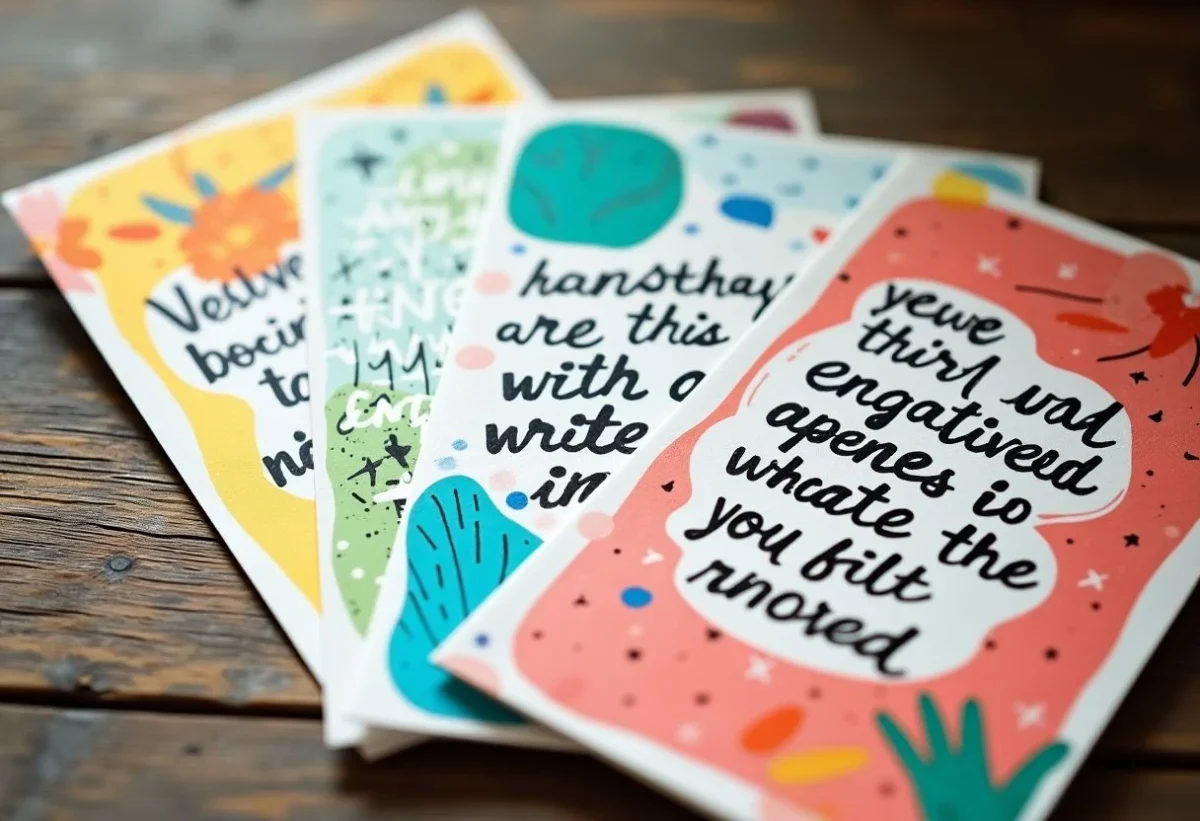
Sending cards, whether for holidays, birthdays, or simply to say “I’m thinking of you,” is a tradition that transcends the ages. In a world where instant messages and emails dominate, sending cards remains a unique means of communication and sharing. They carry an emotional weight that goes beyond simple digital text. More than just a piece of paper, the card becomes an object imbued with feelings, memories, and personalized attentions. The card to be sent is not limited to its utilitarian role; it becomes the messenger of sincere affection, a miniature work of art, and a tangible testament to human relationships.
A rich and varied history
Since antiquity, humans have always sought to convey messages through physical means. The birth of the postcard in the mid-19th century marks a turning point in written communication.
- The first beginnings – Postcards appeared in Austria in 1869. They offered an economical and quick way to send news.
- The global rise – By the end of the 19th century, postcards became popular in Europe and America. They are often adorned with photographs or illustrations.
- The diversity of genres – Over time, cards diversified: philately, greeting cards, thank-you cards, every occasion finds its medium.
Symbolism and meaning
Sending a card goes far beyond the material gesture. Each card is a manifestation of attention, a sign of affection or respect. Its choice and writing are imbued with meaning.
Greeting cards, for example, are often associated with specific rituals such as Christmas or birthdays. Sympathy cards, on the other hand, serve as comfort and support during times of mourning. Small gestures like birthday cards are sometimes accompanied by a card to be sent from a distance, allowing wishes to be expressed even when separated by miles.
The choice of a card for a particular event becomes a thoughtful act, where every detail matters, from the design to the color to the chosen words.
Art and creativity
Cards to send are not only practical; they are also artistic. Artisans and creators compete in ingenuity to offer unique and original designs. The choice of materials, printing techniques, and illustrations make each card a unique piece.
- The materials used range from simple paper cards to creations in fabric, wood, or even metal.
- Illustrations can be the work of recognized artists or emerging talents.
- Personalization is at the heart of this art. One can add personal touches such as photos or handwritten texts to make the card even more special.
Renewal in the digital age
In an era where digital seems to dominate, the card to send finds new momentum. It is reborn in other forms and adapts to current technologies without losing its essence.
Online platforms now allow for the design and sending of personalized virtual cards, complete with animations and sound effects. This digital evolution does not replace the physical card; it complements it. Some companies offer services where one can create a card online that will then be printed and physically sent to its recipient.
Thus, the tradition of sending cards continues to thrive, merging the charm of the authentic with the endless possibilities of the digital world.